
How To Ethically Boost Sales In Your Online Stores (Without More Marketing)
The feature in online stores that makes it easy for buyers to fall in love with what you’re selling, so you can boost profits and positive reviews without increasing your marketing efforts.
Here’s what we’re discussing in this post:
The problem with regular product pages (and how they can hurt sales + trust)
Custom product pages (what they are and why they're better for your business AND your buyers)
Examples of how to use custom product pages for different types of products, services, courses, lead magnets, and more
What to look for in an e-commerce tool (and what to do if yours is too limiting)
How all of this affects how your shoppers remember your brand (and refer it to others!)
As an ethical business owner, you need all your strategies, tools, and content to do more without crossing the line into sleazy or manipulative.
And in this economy, no one wants to increase ad budgets, marketing efforts, or an ever-growing to-do list.
Which is why I get way too excited when I discover a simple way to get bigger results without adding more to your plate.
Allow me to introduce you to my new favorite feature: custom product pages in online stores. I’ll show you exactly what they are and how to use them to quickly boost profits and happy customers.
What’s The Problem With Regular Product Pages?
Let’s start with the way most online stores currently operate. Regular product pages in an online store show images of the product (or service, lead magnet, course, etc.), a description of the product, prices, variations, and so on.
Shoppers can add them to a cart and keep shopping until they’re ready to check out and buy everything in their cart.
Think of the top of an Amazon product page with the option to see reviews (Bezos is evil but that's another blog post...) Now imagine that product page without the whole section in the middle where the store owner can post images and more info and videos of people using the product.
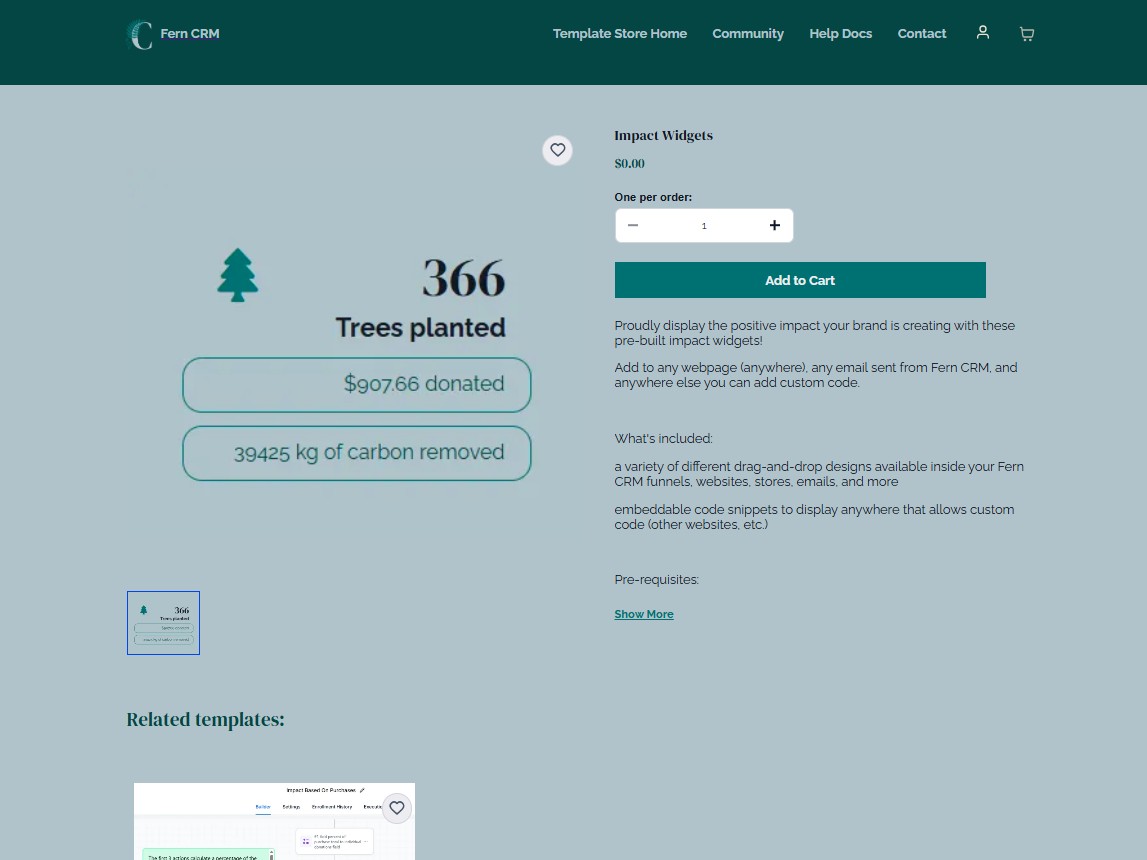
In most online stores, this is the extent of what’s possible on a product page. Sure, you can usually group products into categories, show related products, and things like that. But there’s a limit to how much you can make a page unique to that specific product without affecting all other products in the store.
And that limitation leaves gaps in a buyer’s understanding of what they’re buying. Which they’ll either fill in with their hopes and dreams for what they think they’re buying (which often leads to refund requests and bad reviews when the reality doesn’t match those expectations.) Or they’ll contact your sales/support team with questions that could’ve been easily answered right there on the page. If only you’d had more real estate to play with.
And, for ethical businesses who genuinely care about customer results (and happiness), this can be especially frustrating. We’re not trying to sell to everyone, we’re trying to match our offers/solutions with the people who need them most and will get the best results.
Of course, not every product needs a customized product page and not every product needs to be available in your e-commerce store.
But imagine buying a new book without being able to read a sample first. Or trying to choose between 2 workshops without knowing for sure which one covers the specific part of the problem you're trying to solve.
In both cases, you're more likely to click away and either try to find that info elsewhere or just put it off until you forget all about it and find the solution from someone else.
Customer Experience assessment: regular product pages (sometimes) don’t have enough of the right information to make a smart purchase decision which can lead to refund requests and support headaches.
Business assessment: product page optimization can’t do much with limited features, leading more visitors to bounce without buying or breaking trust when the offer doesn’t live up to what they thought they were buying.
What Is A Custom Product Page?
Custom product pages work exactly like regular product pages but they can “color outside the lines” of regular product pages. All product pages include the same product images, description, prices, and star-based reviews that every online store has.
Custom product pages go beyond that to provide richer storytelling, more details, images, videos, design elements, social proof, and more.
Going back to the Amazon example, custom product pages have that whole section in the middle where the store owner can go into a lot more detail using images, text, videos, and more to fully describe this product with details that don't show up on other product pages.
But that's just one way to customize a product page. It could also be a full sales page like you often see for high-ticket programs and low-cost intro offers. WITH the ability to add the product to their cart and keep shopping. Like usual.
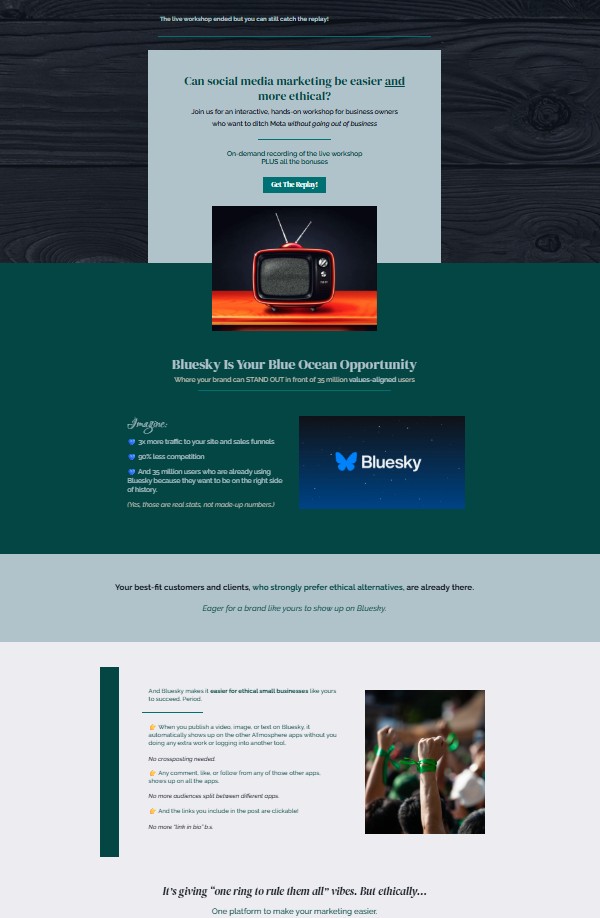
Until recently, it’d be rare to see a long-form sales page with an add-to-cart button. In fact, any offer that needs a typical long-form sales page wouldn’t even be visible in the online store. Even if it’s available to buy any time, by anyone.
Which is a problem! Visitors might add a bunch of things to their cart without realizing there are other offers available.
And that’s the biggest flaw of most online stores. They hide some offers on sales pages outside the store itself, making it hard to buy everything in a single transaction.
And regular product pages limit the seller’s ability to use more words, design, images, testimonials, FAQ’s, and all the things to sell that specific offer.
Customer Experience assessment: it’s too much of a bother to hunt for all the different offers available and enter credit card info multiple times. Which can lead to less sales and lower profit margins for the business, despite investing time & money to bring this visitor to the site.
Business assessment: not every offer needs to be in your online store, but you also shouldn’t feel like you have a limited amount of space and flexibility to sell the way you think it should be sold.
Custom Product Pages Are Better For Buyers AND The Business
This is why custom product pages are such a gamechanger! They give you all the freedom of a blank page to paint exactly the picture you want, while still being available in the store experience.
Go ahead, create that long-form sales page with ALL the conversion design, copy that sells to the 4 different types of buyers, sections that speak to all 8 marketing gaps, and the FAQ that overcomes objections. AND, make every button instantly scroll to the “add to cart” button.
Let your visitors binge-buy every offer you have available at the moment.
Use the extra real estate to show them what each product looks like inside, before they buy.
Be transparent about what’s really included and who it’s for so your business is filled with best-fit buyers.
Display the badges and proof that your business cares about the quality and fairness of your supply chain, raw materials, communities, people, and the planet.
Show them why your business is a better choice than the profits-before-people DGAF corporations that’ll ignore them after the sale. Use this extra space to bond with your buyer and show them that they’d be supporting a business with real humans who care on the other side of the screen.
A generic product page strips all of this out, leaving only the basics of a transaction (price, picture, and a short description) not the depth needed to build a relationship.
A quick overview of how custom product pages protect your profit margins and sanity:
Refund requests often trace back to customers who invented details about what they thought they were buying. When those details don’t show up in the offer itself, they blame the business and ask for their money back.
Fewer refunds means you keep the money you make and save time on customer support and bookkeeping. (Not to mention the penalty some payment processors implement if you issue too many refunds.)
Better-fit buyers means your audience (including your social media following) is filled with happy customers who get results from the things they buy, rave about you to anyone who asks, leave 5-star reviews, and create user-generated content without being asked.
Better-fit buyers are more likely to refer others and buy from you again and again.
More sales, more social proof, and more referrals means you don’t have to work so hard or spend so much on your marketing. Which is what we all want!
And, as I mentioned before, you already work hard (and spend time/effort/money) to bring people to your site to buy your offers. You want every qualified lead to buy as much as (ethically) possible so you can get a big return on your marketing efforts.
Customer experience assessment: more information in more formats makes it easier to make a purchase decision. And having more information to make that decision makes the brand seem more ethical and transparent.
Business assessment: Having better product pages means more sales without more marketing. And it increases the return on every lead that lands on your store pages.
Examples Of How To Use Custom Product Pages
For books, each custom product page could include the first chapter as a free sample (and each book would naturally need its own first chapter, which is hard to do with regular product pages.)
For courses and services you can share videos that show the inside of the offer, screenshots of testimonials, UGC, and more.
For lead magnets, you could even include the opt-in form right there on your store page so they can sign up for it and then keep shopping. Or they can add it to their cart for $0, along with the rest of their purchases. Either way, you’re making it easier for site visitors to find what you have available and bring it home.
For physical products, you can talk more about the factory where it was made, show certification badges for the quality of the raw materials, share UGC, and more.
The only limitation is the tool you’re using and you’re understanding of how to use its features.
Because not every tool has the option to create custom product pages. Which is why so many businesses aren’t using this feature. (And a profitable opportunity for those that do!)
How To Use Custom Product Pages In Fern CRM
Click play (and change the speed to 2x) for a quick overview of how to use custom product pages to:
share the first chapter of a book
show images of what's inside the book
create a long-form sales funnel style page for a service/retreat
step-by-step tutorial of how easy it is to create customized product pages in Fern CRM
We also have a detailed how-to Help Doc (follow along with text & images or the video) here: How To Create Custom Product Pages In Online Stores
What To Look For In An E-Commerce Tool That Offers This Feature
First, check the software you currently use for selling your product/services/courses/etc. Does it let you “color outside the lines” so you can go deeper than just price, photos, and a brief description?
Can you include a different “look at what’s inside” for each offer? Can you include different FAQ’s for products that need to be physically shipped versus products that are available for download?
Look at one of the offers in your online store that’s underperforming. Would it potentially sell better if the page had more "rich content" to describe the offer?
Look at the people who have bought from your online store in the last year. How many of them got the intended results from the things they bought? How many of them referred others?
Not every tool is built with customer experience as the priority (which usually means the business has to work harder to create a positive experience.)
In fact, many online business tools were built during a time when online sales were waaaaaaaay easier and didn’t need a lot of personalization. Some have shoved a bunch of AI features into the software instead of making valuable improvements to keep up with changes in the industry.
While others are digging deeper, prioritizing customer experience, personalization at scale, and values-aligned sales and marketing. And it shows with features like custom product pages.
So if you’re looking at your e-commerce tools and feeling like they don’t give you enough freedom or they aren’t aligned with your brand, it’s definitely not you! Everyone uses the tools they were exposed to at the time they were looking. And a lot of software companies use predatory pricing and marketing to get you hooked and make it hard to leave.
It's so common, it's practically a rite of passage as a business owner.
Just don’t let it hold your business back from building deeper relationships with your site visitors and buyers. Don’t let them hold you hostage because it’s too much work to switch to another tool.
For example, Fern CRM is built for businesses that care and you don’t have to migrate your entire business to start seeing results from it.
It has custom product pages, online stores, sales funnels, email marketing, all-in-one inbox, and more but you can start using it for customer experience and support without changing a thing on the sales and marketing side (if you want!)
That way you can test it out before going all-in. (Because we genuinely care about our customers’ results while avoiding refund requests and bad reviews too!)
The Buying Experience IS The Brand (In The Mind Of Your Buyers)
Every touchpoint someone has with your brand shapes trust. And consumer trust is at an all-time low in the 2020’s thanks to years of bad business practices by unethical brands.
Your online sales pages and stores are high-stakes touch points that can make or break trust. That will determine the shape of your brand in your visitors’ minds.
For ethical business owners, this goes beyond conversion tactics. It’s a matter of feeling good about the way you do business and the relationships you build with everyone your brand touches.
Your business tools should give you the features needed to sell the way you want to. And leave your customers feeling like they made the right choice, trusted the right brand, and feel good about where they spent their money.
Because integrity is as important as income for some of us!
If you want to feel good about where the money goes after you pay your software subscriptions each month, I highly recommend looking at Fern CRM.
It literally exists to help ethical businesses outperform the Musks, Bezos, and other bozos of the world so we can (collectively) change the world.
Pin this post:
Custom Product Pages In Fern CRM
Creating customized product pages for any product (or service, course, lead magnet, etc.) is super easy in Fern CRM! Navigate to your Online Store which is inside the Sites section (in the left sidebar menu) where you also find Funnels, Websites, Blogs, Webinars, Forms, Quizzes, Surveys, QR Codes, and more.
Create a new page and choose "Custom Product Page" during page creation. Then just use the drag-and-drop page builder like you would for any web page or landing page.
If you need help creating a customized product page in your Fern CRM account, check the Help Doc site, YouTube channel, post in the member community, and/or come to Office Hours for hands-on help.